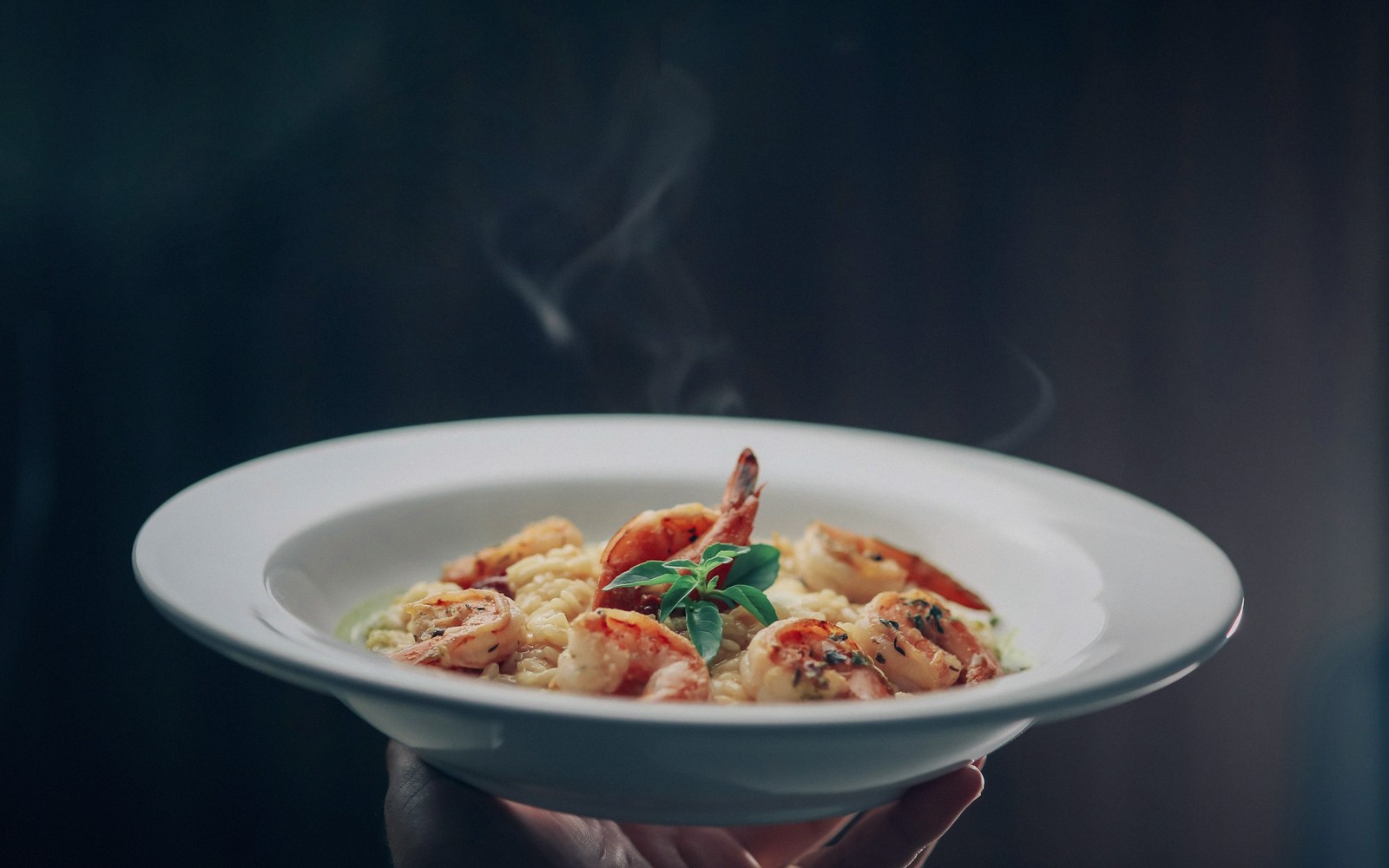
The Sea Arrives on a Plate
The fish on a Sicilian island is not a restaurant concept. It is logistics made edible — whatever the boats unloaded at first light is what appears on your plate by evening, and the sequence from net to kitchen is so short that cooking becomes almost incidental. A grouper caught off the Egadi reefs doesn't need a sauce. A sea bream from the waters around Lampedusa asks only for good oil, lemon and a hot grill. The menu is written by the sea.
The most commanding of the island dishes, though, is not a grilled fillet — it is couscous di pesce, and it belongs to Trapani and its offshore archipelago the way carbonara belongs to Rome. The grain itself is North African; the crossing of influences is centuries old, a result of trade and proximity rather than any single historical moment. Here, the couscous is steamed slowly in a clay pot called a mafaradda, often over several hours, then ladled with a fish broth so dense and orange-red from tomato and saffron that it stains the bowl. The fish — scorpionfish, mullet, whatever the morning offered — is cooked separately and arranged on top, or folded in, depending on the cook. It is a dish of patience and of place.
Further south, toward the Pelagie Islands, the Arab influence on the kitchen deepens. Couscous remains, but so do almonds ground into pastries, raisins stirred into savoury dishes, and the sweet-sour balance of agrodolce that shows up in everything from pickled aubergines to swordfish preparations. The capers and couscous connection alone runs through the island kitchen like a seam of ore — these two ingredients, more than any other, tell you how far south you've come.
Capers, and Why These Ones Are Different
The capers grown on Pantelleria are famous enough to have protected designation status — they are larger, more pungent, and more intensely aromatic than anything you'll find jarred in a supermarket on the mainland. Salted rather than pickled in brine, they come packed in coarse sea salt and need to be soaked and rinsed before use, which concentrates the floral, almost musky flavour. You will eat them in pasta alla Norma variants, in salmoriglio dressings over grilled fish, scattered cold over sliced tomatoes with nothing but oil — and each time the island flavour is unmistakable.
On Lampedusa and Linosa, capers grow wild along the stone walls and cliff edges, their flowers opening white and brief before the sun closes them again. Even the smallest trattoria will keep a jar on the table alongside the oil. Order a plate of raw vegetables and local cheese and those capers will be your seasoning. Eat enough of them and you will start to understand why a Sicilian cook reaching for a caper is making an entirely different decision from one using the vinegar-soaked version from a jar in Lyon.
Alongside capers, the islands rely on another holy trinity: olive oil, salt and good bread. Not artisan bread — pane di casa, the daily loaf, sometimes seeded with sesame the way Palermitan breads often are, substantial enough to mop a bowl without disintegrating.
The Hours of Eating
The structure of eating on a Sicilian island is as fixed as the ferry timetable and roughly as immovable. Breakfast is not negotiable: granita, brioche, coffee. The granita comes first, or simultaneously, or mixed — depending which bar and which family — and it is cold and intensely flavoured in a way that makes the northern European notion of a cold drink seem provisional. Almond granita, made from local pasta di mandorle, is the purist's choice. Coffee granita with whipped cream — panna — is the other. The brioche, slightly sweet, is not a side dish; it is the vessel. You pull it apart and use it to scoop the granita. This is breakfast as it was intended. A granita morning on the right terrace, facing east, is one of the better arguments for choosing islands over cities.
Lunch, if you eat it, is the meal the kitchen takes seriously. Dinner is lighter, or just as serious but later — ten in the evening is not unusual. Between the two, the afternoon belongs to the body: swimming, shade, stillness. Eating again too soon would defeat the point.
What the island kitchen rarely does is perform. There is no theatre of service, no architectural plating. The frittura comes in a paper cone — little fish, fried crisp, eaten with your fingers at a table that probably wobbles. The pasta is cooked in real time for real people. The wine is local, cold and modest. The olive oil is not infused with anything, because nothing needed to be added. The best meal you will eat on a Sicilian island will likely not be the one you planned — it will be the one the woman at the port decided you were going to have, based on what her cousin landed before dawn.
That is the principle. The rest is logistics.