Accidental screens across the southern islands
The Mediterranean has always been resourceful. When cinema arrived — first in city halls, then travelling south by mule-cart and later by ferry — it found no shortage of vertical surfaces willing to double as screens. Churches, forts, harbour walls: these structures were already part of the communal imagination before anyone strung up a white sheet in front of them. What follows is five of the most enduring examples of architecture pressed into accidental service.
The walls themselves
The apse of a deconsecrated church, Favignana. Churches retire, but they rarely disappear. On Favignana, the largest of the Egadi Islands off Sicily's western tip, summer screenings have taken place in the courtyard and against the exterior wall of an old church whose liturgical life long since ended. The apse — that curved, eastward-facing end — catches projected light with peculiar warmth, the pale stone returning the image softly, slightly amber. Rows of mismatched chairs appear at dusk. The film begins when the last ferry noise dies away.
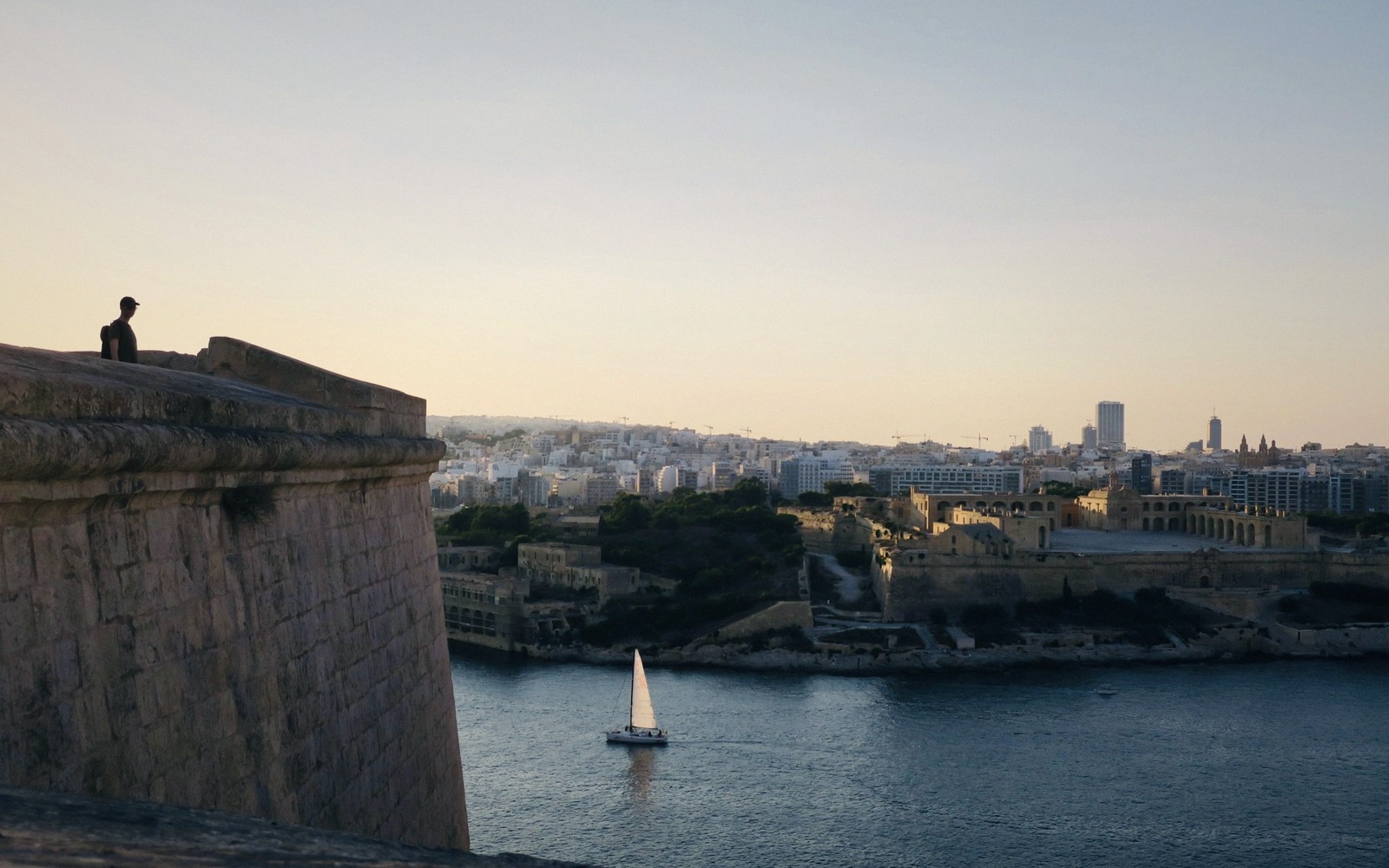
The curtain wall of a coastal fort, Pantelleria. Pantelleria's Castello Barbacane, the basalt-black fortress at the edge of the main port, was built to face threats arriving from the sea. It now faces a different kind of audience. The long western wall, interrupted by nothing, has served as an impromptu screen on summer nights — a garrison wall made briefly luminous. The island's North African proximity has made it a natural venue for films from both shores of the Mediterranean, screened as part of local cultural programmes with minimal ceremony and maximum atmosphere.
A lighthouse outbuilding, Lampedusa. The Faro della Tabaccara stands on Lampedusa's southern coast, its light still functioning, its outbuildings less so. On evenings when the sirocco is quiet and the air thick with salt, the blank stucco wall of an old generator shed has been used as a screen, the projector run from a long cable and a great deal of extension-cord optimism. This is cinema under the stars at its most literal: no programme, no ticketing, a gathering that might number twenty people or sixty depending on who heard about it and how.
The harbour breakwater, Linosa. Linosa's harbour is small and its breakwater smaller still, a low concrete arm reaching into water that turns violet after sunset. Against the flat side of the breakwater's landward face, a sheet — not even a proper screen — stretched between two poles has served as the venue for outdoor screenings organised by the island's tiny permanent community in summer. The audience perches on folding chairs, on upturned crates, on the steps of a nearby building. The black volcanic hills behind swallow the light. Nothing spills far.
The exterior of a masseria granary, western Sicily. Not on one of the small islands, but the principle is the same: a masseria is a fortified farmhouse, and their granaries often have the long, uninterrupted south-facing walls that cinema craves. In the agricultural hinterland west of Palermo, some of these grain stores — solid Norman and Arab-influenced stonework, built to resist not just thieves but Sicilian summer heat — have been used for outdoor rural screenings, the wall close to cream-coloured, near-perfect for projection. The grain is long gone. The wall remains, patient.
What they have in common
None of these venues was designed to show films. All of them are improved by the fact. The accidental screen carries something that a purpose-built cinema rarely can: the sense that what you are watching is borrowing time, borrowing stone, that the darkness is the same darkness that fell here before cinema existed and will fall here long after. There is texture in the surface — roughness, age, the slight imperfection that makes the image tremble at the edges. That tremble is not a flaw. It is what outdoor cinema offers that no interior can match: the feeling that the world is porous, that a story can seep into real stone and sit there for a while.
The southern islands have always been good at this — at using what exists without making a fuss about it. Bring a chair. Watch the wall.