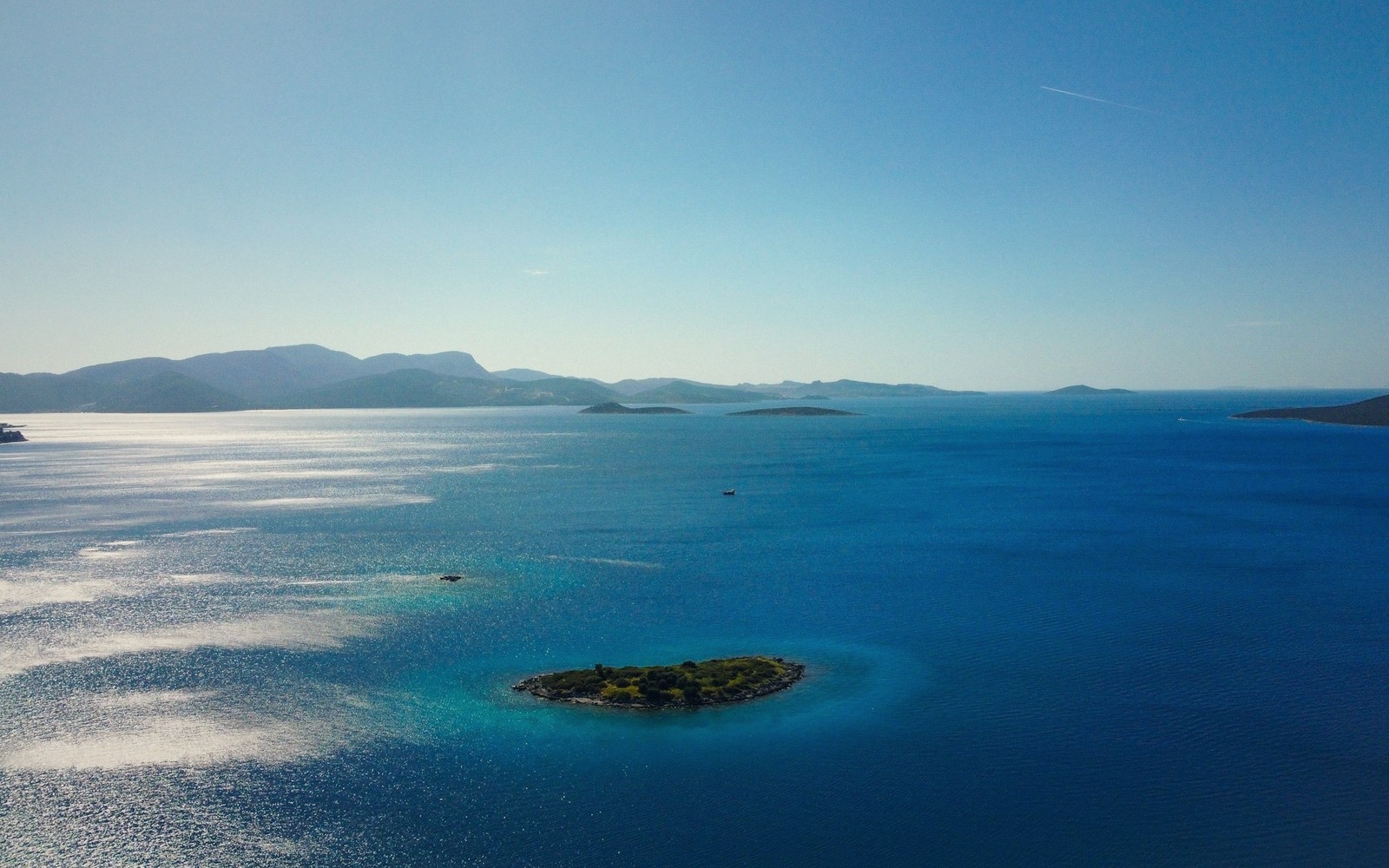
Rock, Lava and Limestone
Spread across a stretch of open Mediterranean closer to Tunisia than to Sicily, the Pelagie Islands are, geologically speaking, a small argument about origins. Lampedusa and its uninhabited twin Lampione are fragments of the African continental shelf — limestone plateaux worn flat by wind and sea, with no high ground to catch rain and almost no native trees. Linosa, by contrast, is a volcanic upstart, born from eruptions entirely unconnected to the African plate, its hills still coloured with the dark greens and blacks of hardened lava. You can see this divide in the soil, the coves, even the light: Lampedusa glitters pale; Linosa broods beautifully.
All three islands belong administratively to the Sicilian province of Agrigento, though culturally they feel like a category of their own — closer, by boat and by temperament, to North Africa. Arab rule, Maltese fishermen, Tunisian trade winds, the couscous on every menu: the Mediterranean here is genuinely shared territory. The capers, couscous, and slow-braised fish that define the local table are not a tourist flourish; they are the historical record.
Lampedusa: The Busy One
Lampedusa is the largest of the three — around twenty square kilometres — and the only one with a proper airport and a town of any scale. In August it is heaving: day-trippers, dive boats, sunbeds pushed to the edges of extraordinary beaches. Cala dei Conigli, Rabbit Beach, consistently appears near the top of Mediterranean rankings, and visits are now managed with timed entry to protect the nesting loggerhead turtles that share the sand each summer. The rest of the coastline repays exploration: there are pale-water inlets and sea-carved rock that most visitors never reach.
What Lampedusa lacks — vegetation, altitude, architectural drama — it compensates for with light and with sea colour that shades from turquoise to ink-blue within a few hundred metres of shore. Evenings are spent at the port, where the fishing boats still unload and the restaurants line the harbour in the completely unpretentious way that only places certain of their supply chain can afford. Come in June rather than August and you will find the same water, the same fish, considerably fewer people, and prices that have not yet decided they can ask anything they like.
Linosa: The Quiet One
Forty kilometres northeast of Lampedusa, Linosa rewards a slower temperament. The island has around four hundred permanent residents, a handful of guesthouses, one road worth the name, and swimming off volcanic rock into water that is very dark and very clear. There are no sandy beaches to speak of — swimming here is a matter of finding the right ledge — but the snorkelling is exceptional, and the absence of a mass-market beach infrastructure keeps the pace entirely different. Linosa is where Lampedusa regulars go when they want to remember what the islands were like before the ferries started running twice daily.
Lampione: The Empty One
Lampione, about seventeen kilometres west of Lampedusa, is a tiny limestone outcrop of only a few hectares with no inhabitants, no landing stage and, in summer, a rotating presence of marine biologists studying the monk seals that shelter along its cliffs. Day-boat excursions from Lampedusa occasionally pass it; nobody stays. It is useful mainly as a reminder that the Pelagie exist at all because the sea floor rose, and that not every piece of it rose far enough to become useful.